These are some interview question and answer asked during my recent interview. Oracle interview questions are very important during any programming job interview. Interviewer always want to check how comfortable we are with any database either we go for Java developer position or C, C++ programmer position .So here I have discussed some basic question related with oracle database. Apart from these questions which is very specific to Oracle database you may find some general questions related to database fundamentals and SQL e.g. Difference between correlated and noncorrelated subquery in database or truncate vs delete in SQL etc. Some of the most important topics in Oracle Interview questions are SQL, date, inbuilt function, stored procedure and less used features like cursor, trigger and views. These questions also gives an idea about formats of questions asked during Oracle Interview.
Showing posts with label SQL. Show all posts
Showing posts with label SQL. Show all posts
Spring Framework Difference between Primary key vs Foreign key in table – SQL database tutorial
Main difference between Primary key and Foreign key in a table is that, it’s the same column which behaves as primary key in parent table and as foreign key in child table. For example in Customer and Orderrelationship, customer_id is primary key in Customer table but foreign key in Order table. By the way what is foreign key in a table and difference between Primary and Foreign key are some of the popular SQL interview questions, much like truncate vs delete in SQL or difference between correlated and noncorrelated subquery. We have been learning key SQL concepts along with these frequently asked SQL questions and in this SQL tutorial we will discuss about what is foreign key in SQL and purpose of foreign key in any table. By the way this is the third article related to primary key in SQL, other being difference between primary and unique key and How to find second highest salary in SQL. If you are preparing for any technical job interview where you expect some SQL questions, check out these questions, they are worth preparing.
Spring Hibernate SQL Query to find all table names on database in MySQL and SQL Server Examples
How do you find names of all tables in a database is a recent SQL interview questions asked to one of my friend. There are many ways to find all table names form any database like MySQL and SQL Server. You can get table names either from INFORMATION_SCHEMA or sys.tables based upon whether you are using MySQL or Sql Server database. This is not a popular question like when to use truncate and delete or correlated vs noncorrelated subquery which you can expect almost all candidate prepare well but this is quite common if you are working on any database e.g. MySQL. In this SQL tutorial we will see examples of getting names of all tables from MySQL and SQL Server database. In MySQL there are two ways to find names of all tables, either by using "show" keyword or by query INFORMATION_SCHEMA. In case of SQL Server or MSSQL, You can either use sys.tables or INFORMATION_SCHEMA to get all table names for a database. By the way if you are new in MySQL server and exploring it , you may find this list of frequently used MySQL server commands handy.
Spring Framework What is Referential Integrity in Database or SQL - MySQL Example Tutorial
Referential Integrity is set of constraints applied to foreign key which prevents entering a row in child table (where you have foreign key) for which you don't have any corresponding row in parent table i.e. entering NULL or invalid foreign keys. Referential Integrity prevents your table from having incorrect or incomplete relationship e.g. If you have two tables Order and Customer where Customer is parent table with primary key customer_id and Order is child table with foreign key customer_id. Since as per business rules you can not have an Order without a Customer and this business rule can be implemented using referential integrity in SQL on relational database. Referential Integrity will cause failure on any INSERT or UPDATE SQL statement changing value of customer_id in child table, If value of customer_id is not present in Customer table. By the way What is Referential Integrity in SQL is also an important SQL question similar to finding second highest salary in SQL or difference between truncate and delete and should be prepared well before going for any job interview, where knowledge of SQL is one of the requirement.
Spring Hibernate What is difference between java.sql.Time, java.sql.Timestamp and java.sql.Date - JDBC interview Question
Difference between java.sql.Time, java.sql.Timestamp and java.sql.Date is most common JDBC question appearing on many core Java interviews. As JDBC provides three classes java.sql.Date, java.sql.Time and java.sql.Timestamp to represent date and time and you already have java.util.Date which can represent both date and time, this question poses lot of confusion among Java programmer and that’s why this is one of those tricky Java questions which is tough to answer. It becomes really tough if differences between them is not understood correctly. We have already seen some frequently asked or common JDBC questions like why JDBC has java.sql.Date despite java.util.Date and Why use PreparedStatement in Java in our last tutorials and we will see difference between java.sql.Date, java.sql.Time and java.sql.Timestamp in this article. By the way apart from these JDBC interview questions, if you are looking to get most from JDBC you can also see 4 JDBC performance tips and 10 JDBC best practices to follow. Those article not only help you to understand and use JDBC better but also help on interviews. Let’s come back to difference sql time, timestamp and sql date.
Spring Framework SQL Interview Questions and Answers on deleting records
The following is a very popular SQL job interview question.
Q. What is the difference between "Truncate" and "Delete" commands?
A.
- TRUNCATE TABLE_NAME always locks the table and page but not each row, whereas DELETE statement is executed using a row lock, each row in the table is locked for deletion.
- Truncate removes all the records in the table whereas delete can be used with WHERE clause to remove records conditionally. That is remove only a handful number of records.
- Truncate performance is much faster than Delete, as its logging is minimal wheres the Delete command logs every record.
- Truncate does not retain the identity, whereas DELETE command retains the identity. When you use Truncate, If the table contains an identity column, the counter for that column is reset to the seed value that is defined for the column.
- Truncate cleans up the object statistics and clears the allocated space whereas Delete retains the object statistics and allocated space.
- TRUNCATE is a DDL (Data Definition Language) and DELETE is a DML (Data Manipulation Language).
- Data removed by TRUNCATE command cannot be generally rolled back unless the database server specifically supports it. The DELETE command can rollback a transaction.
- The TRUNCATE command does not fire any triggers, whereas the DELETE command fires any triggers defined on the table. For example, to keep an audit trail of records that have been deleted by inserting the deleted records into an audit table via the DELETE triggers.
Q. When will you use a truncate command?
A.TRUNCATE is useful for purging a table with huge amount of data. Alternatively, you can drop the table and recreate it that makes sense. Firing a delete command instead of a truncate command to empty a table with millions of records can result in locking the whole table and also can take longer time to complete, and at times cause the machine to hang.
The truncate command is executed as shown below.
TRUNCATE TABLE table_name
Q. Which command will you use to periodically purge data from your tables as part of a house keeping job?
A. Use a DELETE command within a transaction with a WHERE clause to remove data that are older than 7 years. Remove large amount of data in batches as opposed to in a single transaction.
Q. How will you delete a few records from single table
A.
DELETE FROM parent p WHERE p.parent_name = 'Peter'
Q. How will you delete a few records from parent and child tables where the parent table with parent_name = 'Peter'?
A.
Firstly, you need to delete the child records because the integrity constraint won't let you delete the parent record when there are child records.
DELETE child

FROM  parent p, child c

WHERE p.parent_id = c.parent_id

  AND p.parent_name = 'Peter'
Now, the parent table can be deleted as shown below
DELETE FROM parent p WHERE p.parent_name = 'Peter'
Note: Please note the difference in syntax when you make a join with the child. When there is only a single table involved, it is "DELETE FROM table_name", but when there is a join, it is "DELETE table_name" and then the "FROM" with the join clauses.
Q. What do you do with the PURGE command?
A. The purge command is used to clear the recycle bin. It is generally used with the DROP command. For example,
drop table tablename purge;
the above command will clear away the table from database as well as from the recycle bin. After executing the purge command, you cannot retrieve the table using a flashback query.
Spring Framework Oracle Pagination SQL query example for Java programmer
Many time we need SQL query which return data page by page i.e. 30 or 40 records at a time, which can be specified as page size. In fact Database pagination is common requirement of Java web developers, especially dealing with largest data sets. In this article we will see how to query Oracle 10g database for pagination or how to retrieve data using paging from Oracle. Many Java programmer also use display tag for paging in JSP which supports both internal and external paging. In case of internal paging all data is loaded in to memory in one shot and display tag handles pagination based upon page size but it only suitable for small data where you can afford those many objects in memory. If you have hundreds of row to display than its best to use external pagination by asking databaseto do pagination. In pagination, ordering is another important aspect which can not be missed. It’s virtually impossible to sort large collection in Java using Comparator or Comparablebecause of limited memory available to Java program, sorting data in database using ORDER BY clause itself is good solution while doing paging in web application.
Spring Framework SQL query to add, modify and drop column in table with default value NOT NULL constraint – MySQL database
How to add column in existing table with default value is another popular SQL interview question asked for Junior level programming job interviews. Though syntax of SQL query to add column with default value varies little bit from database to database, it always been performed using ALTER keyword of ANSI SQL. Adding column in existing table in MySQL database is rather easy and straight forward and we will see example of SQL query for MySQL database which adds a column with default value. You can also provide constraints like NULL or NOT NULL while adding new column in table. In this SQL tutorial we are adding third column in a table called Contacts which contains name and phone of contacts. Now we want to add another column email with default value "abc@yahoo.com". We will use ALTER command in SQL to do that. By the way this is next in our SQL tutorials e.g. How to join three tables in SQL and SQL query to find duplicate records in table. If you haven’t read them yet, then you may find them useful.
Spring Framework How to create auto incremented identity column in SQL Server, MySQL, Sybase and Oracle ?
Automatic incremented ID, Sequence or Identity columns are those columns in any table whose value is automatically incremented by database based upon predefined rule. Almost all databases e.g. Microsoft SQL Server, MySQL, Oracleor Sybase supports auto incremented identity columns but in different ways like Oracle provides SEQUENCE object which can be used to generate automatic numbers, Microsoft SQL Server upto 2008 version provides IDENTITY() functions for similar purpose. Sybase also has IDENTITY function but little different than SQL Server and MySQL uses auto_incremented keyword to make any numeric column auto incremented. As first normal form advised about primary keys which is used to uniquely identity row and if there is no natural column or combination of column exists to act as primary key, mostly database developer use auto incremented surrogate keys which is used to uniquely identify each row. In this SQL tutorial we will see how to generate auto incremented ID column in Microsoft SQL Server, Oracle 11g, MySQL and Sybase ASE Server. By the way this SQL article is continuation of my earlier post on SQL and database like difference between truncate and delete in SQL and Finding second highest salary in MySQL and SQL Server. If you haven't got chance to read them than I suggest they are worth looking.
Spring Framework Sybase and SQL Server PATINDEX CHARINDEX Example to split String in Stored procedure
Some time we need to split a long comma separated String in Stored procedure e.g. Sybase or SQL Server stored procedures. Its quite common to pass comma delimited or delimiter separated String as input parameter to Stored procedure and than later split comma separated String into multiple values inside stored proc. This is not just case of input parameter but you can also have comma separated string in any table data. Unfortunately there is no split() function in Sybase or SQL Server 2005 or 2008 which can directly split string based on delimiter just like in Java string split method. Fortunately Sybase Adaptive Server and Microsoft SQL server has functions like CHARINDEX and PATINDEX which can be used to split comma separated String. This is next on our SQL tutorials after seeing SQL query to find duplicate records in table and How to find 2nd and Nth maximum salary in SQL.
Spring Hibernate SQL Interview Questions and Answers: storing a tree structure in a database table
Q. How will you represent a hierarchical structure shown below in a relational database? or How will you store a tree data structure into DB tables?

A.The hierarchical data is an example of the composite design pattern. The entity relationship diagrams (aka ER diagram) are used to represent logical and physical relationships between the database tables. The diagram below shows how the table can be designed to store tree data by maintaining the adjacency information via superior_emp_id.

as you can see the "superior_emp_id" is a foreign key that points to the emp_id in the same table. So, Peter has null as he has no superiors. John and Amanda points to Peter who is their manager or superior and so on.
The above table can be created using SQL DDL (Data Definition Language) as shown below.
CREATE TABLE employee (

emp_id          NUMBER (4) CONSTRAINT emp_pk PRIMARY KEY,
emp_name        VARCHAR2 (40) NOT NULL,
title           VARCHAR2 (40),
dept_id         NUMBER (2) NOT NULL,
superior_emp_id NUMBER (4) CONSTRAINT emp_fk REFERENCES employee(emp_id)

CONSTRAINT emp_pk
PRIMARY KEY NONCLUSTERED (emp_id)

)
This can be represented as an object model to map relational data as shown below
public class Employee {

   private Long id;
   private String name;
   private String title;
   private Employee superior;
   private Set subordinates;

   //getters and setters are omitted

}
Q. How will you find out the superior for an emplyee?
A. You can use a self-join to find the manager of an employee
Select e.emp_id,e.emp_name, title from
employee e, employee s
where e.superior_emp_id = s.employee_id
  and e.emp_id = 3
This should return
1, Peter, cio
Q. Is there any other way to to store tree structure in a relational database?
A. Yes, it can be done using the "modified preorder tree traversal" as described below.

As shown in the diagram above, each node is marked with a left and right numbers using a modified preorder traversal as shown above. This can be represented in a database table as shown below.

As you can see the numbers indicate the relationship between each node. All left values greater than 6 and right values less than 11 are descendants of 6-11 (i.e Id: 3 Amanda). Now if you want to extract out the 2-6 sub-tree for Amanda you can write the SQL as follows
SELECT * FROM employee WHERE left_val BETWEEN 6 and 11 ORDER BY left_val ASC;
Which will return Amanda, Ralph, and Jeanne.
If you want to get ancestors to a given node say 7-8 Ralph, you can write the SQL as follows
SELECT * FROM employee WHERE left_val < 7 and right_val > 8 WHERE ORDER BY left_val ASC;
Which will return: Peter and Amanda.
If you want to find out the number of descendants for a node, all you need is the left_val and right_val of the node for which you want to find the descendants count. The formula is
No. of descendants = (right_val - left_val -1) /2
So, for 6 -11 Amanda, (11 - 6 - 1) /2 = 2 descendants
for 1-12 Peter, (12 - 1 -1 ) / 2 = 5 descendants.
for 3-4 Mary, (4 -3 - 1) / 2 = 0, means it is a child and has no descendants.
The modified preorder traversal is a little more complicated to understand, but is very useful.
Spring Framework How to find second highest or maximum salary of Employee in SQL - Interview question
How to find second highest or second maximum salary of an Employee is one of the most frequently asked SQL interview question similar to finding duplicate records in tableand when to use truncate vs delete. There are many ways to find second highest salary based upon which database you are using as different database provides different feature which can be used to find second maximum or Nth maximum salary of employee. Well this question can also be generalized with other scenario like finding second maximum age etc. In this SQL tutorial we will see different example of SELECT SQL query to find second highest salary independent of databases or you may call in ANSI SQL and other SQL queries which uses database specific feature to find second maximum salary.
Spring Framework How to join three tables in SQL query – MySQL Example
Three table JOIN Example SQL
Read more »
Joining three tables in single SQL query can be very tricky if you are not good with concept of SQL Join. SQL Joins have always been tricky not only for new programmers but for many others, who are in programmingand SQL for more than 2 to 3 years. There are enough to confuse someone on SQL JOIN ranging from various types of SQL JOIN like INNER and OUTER join, LEFT and RIGHT outer join, CROSS join etc. Between all of these fundamentals, What is most important about Join is, combining multiple tables. If you need data from multiple tables in one SELECT query you need to use either subqueryor JOIN . Most of times we only join two tables like Employee and Department but some time you may require to join more than two tables and a popular case is joining three tables in SQL. In case of joining three tables table 1 relates to table 2 and than table 2 relates to table 3. If you look at closely you find that table 2 is a joining table which contains primary key from both table 1 and table 2. As I said it can be extremely confusing to understand join of three or more tables. I have found that understanding table relationship as primary key and foreign key helps to alleviate confusion than the classical matching row paradigm. SQL Join is also a very popular topic in SQL interviews and there is always been some questions from Join like Difference between INNER and OUTER JOIN, SQL query with JOIN e.g. Employee Departmentrelationship and Difference between LEFT and RIGHT OUTER JOIN etc. In short this is one of the most important topic in SQL both from experience and interview point of view.
Spring Framework SQL query to copy, duplicate or backup table in MySQL, Oracle and PostgreSQL database
Many times we need to create backup or copy of tables in database like MySQL, Oracle or PostgreSQL while modifying table schema like adding new columns, modifying column or dropping columns. Since its always best to have a backup of table which can be used in any event. I was looking for an easy way to create exact copy or duplicate tables which must be same in schema as well as in data, similar to creating copy of folder. Luckily there is an easy SQL query "CREATE table table_name AS" which allows you to create exact copy of table by executing just one SQL query. Yes, you read it correctly, no tool is required to create backup of table you just need to execute an SQL query. This is simply awesome given its importance and best part of this SQL query is that it works in almost all the database. I have tested it in MySQL and Oracle but t it should work perfectly find in other databases like PostgreSQL, SQL Server and DB2 as well. This SQL query tip is in continuation of my earlier SQL query examples like SQL query to find duplicate rows in a table and SQL query to join three tables in MySQL.
Spring Framework How to create and call stored procedure in MySQL with IN and OUT parameters
It's hard to remember exact syntax of, how to create stored procedure in MySQL, until you are creating and working on stored procedure frequently, simply because syntax is not a one liner. You need to remember exact syntax, if you are using MySQL database from command line. What help in this case is, quick examples. In last couple of MySQL tutorial we have seen How to find second highest salary and How to join 3 tables in one query; In this MySQL tutorial we will see couple of examples of creating stored procedure and calling stored procedure using IN and OUT parameters. All these MySQL examples are simple and help you to understand syntax of creating stored procedure with parameters in MySQL. These examples are tested in MySQL 5.5 database. We will also use following employee table to create and test these stored procedures :
Spring Framework How to find duplicate records in a table on database - SQL tips
How to find duplicate records in table is a popular SQL interview question which has been asked as many times as difference between truncate and delete in SQL or finding second highest salary of employee. Both of these SQL queries are must know for any one who is appearing on any programming interview where some questions on database and SQL are expected. In order to find duplicate records in database table you need to confirm definition of duplicates, for example in below contact table which is suppose to store name and phone number of contact, a record is considered to be duplicate if both name and phone number is same but unique if either of them varies. Problem of duplicates in database arise when you don't have a primary key or unique key on database and that's why its recommended to have a key column in table. Anyway its easy to find duplicate records in table by using group by clause of ANSI SQL. Group by clause is used to group data based upon any column or a number of columns. Here in order to locate duplicate records we need to use group by clause on both name and phone as shown in second SQL SELECT query example. You can see in first query that it listed Ruby as duplicate record even though both Ruby have different phone number because we only performed group by on name. Once you have grouped data you can filter out duplicates by using having clause. Having clause is counter part of where clause for aggregation queries. Just remember to provide temporary name to count() data in order to use them in having clause.
Java J2EE Spring SQL Interview Questions and Answers
Q: Explain inner and outer SQL joins?
A: Joins allow database users to combine data from one table with data from one or more other tables (or views, or synonyms). Tables are joined two at a time making a new table containing all possible combinations of rows from the original two tables.
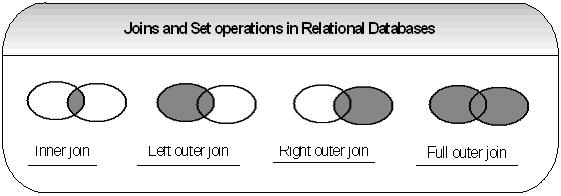
Inner joins: Chooses the join criteria using any column names that happen to match between the two tables. The example below displays only the employees who are executives as well.
SELECT emp.firstname, exec.surname
FROM employees emp, executives exec
WHERE emp.id = exec.id;
Left Outer joins: A problem with the inner join is that only rows that match between tables are returned. The example below will show all the employees and fill the null data for the executives.
SELECT emp.firstname, exec.surname
FROM employees emp left join executives exec ON emp.id = exec.id;
Right Outer join: A problem with the inner join is that only rows that match between tables are returned. The example below will show all the executives and fill the null data for the employees.
SELECT emp.firstname, exec.surname
FROM employees emp right join executives exec ON emp.id = exec.id;
Full outer join: To cause SQL to create both sides of the join
SELECT emp.firstname, exec.surname
FROM employees emp full join executives exec ON emp.id = exec.id;
Self join: A self-join is a join of a table to itself. If you want to find out all the employees who live in the same city as employees whose first name starts with “Peter”, then one way is to use a sub-query as shown below:
SELECT emp.firstname, emp.surname
FROM employees emp
WHERE city IN (SELECT city FROM employees where firstname like ‘Peter’)
Q. Explain a sub-query? How does a sub-query impact on performance?
A. It is possible to embed a SQL statement within another. When this is done on the WHERE or the HAVING statements, we have a subquery construct.
Q. What is subquery useful for?
A. It is used to join tables and there are cases where the only way to correlate two tables is through a subquery.
SELECT emp.firstname, emp.surname
FROM employees emp
WHERE emp.id NOT IN (SELECT id FROM executives);
There are performance problems with sub-queries, which may return NULL values. The above sub-query can be re-written as shown below by invoking a correlated sub-query.
SELECT emp.firstname, emp.surname
FROM employees emp
WHERE emp.id NOT EXISTS (SELECT id FROM executives);
The above query can be re-written as an outer join for a faster performance as shown below:
SELECT emp.firstname, exec.surname
FROM employees emp left join executives exec on emp.id = exec.id AND exec.id IS NULL;
The above execution plan will be faster by eliminating the need for a sub-query.
Q. Can you give SQL examples for the following scenarios?
A.
Scenario 1: Retrieve first name and sum of order qty for order sum greater than 25, and group the order sum by first name.?
SELECT FIRSTNAME,SUM(QTY)
FROM orders
GROUP BY FIRSTNAME
HAVING SUM(QTY)>25;
Scenario 2: Retrieve all employees whose name has a String "au"?
SELECT *
FROM employees emp
WHERE emp.firstname LIKE ‘%au%’;
Scenario 3: select account number and adviser code for a given adviser code, but restrict the returned values to supplied min and max limit. For example, record 1 to record 10, record 11 to record 20, etc.
The SQL for the above scenario needs to use some custom SQL parameters and functions. The example below uses the ROWNUM variable that keeps track of the row numbers in Oracle. The nested query shown below can limit the returned results based on a lower and upper limit.
select * from
    (select a.ACCOUNT_NO, a.ADVISER_CODE, ROWNUM rnum from
       ( Select * from accounts where ADVISER_CODE=:advCode order by advCode)  a
where ROWNUM <= :max_row)
    where rnum  >=  :min_row
Q: In your experience, what are some of the common mistakes developers make?
A:
1. Cartesian joins
SQL Joins are used to relate information in different tables. A Join condition is a part of the sql query that retrieves rows from two or more tables. A SQL Join condition is used in the SQL WHERE Clause of select, update, delete statements.
The Syntax for joining two tables is:
SELECT col1, col2, col3
FROM table_name1, table_name2
WHERE table_name1.col2 = table_name2.col1;
If a sql join condition is omitted as shown below
SELECT col1, col2, col3
FROM table_name1, table_name2
or if the condition is invalid, then the join operation will result in a Cartesian product. The Cartesian product returns a number of rows equal to the product of all rows in all the tables being joined. For example, if the first table has 20 rows and the second table has 10 rows, the result will be 20 * 10, or 200 rows. This query will take a long time to execute.
2. Use of SELECT *
For example, a common misuse of SELECT * is to extract a set of all employees and to insert them into another table called Contractors with the same structure
INSERT INTO Contractors
  SELECT * FROM Employees WHERE emp_type = 'C';
The above query does the job, however, one day business requirements change and two new columns are added to the Employees table:
ALTER TABLE Products
  ADD effective_start_date DATETIME, effective_end_date DATETIME;
All of sudden the query that extracts from the Employees table and insert records into the Contractor table results in error.
"Insert Error: Column name or number of supplied values does not match table definition."
The fix is to explicitly list the column names in the query:
INSERT INTO Contractors (emp_id, emp_name)
  SELECT emp_id, emp_name FROM Employees WHERE emp_type = 'C';
3. Embedding User Interface (UI) layer logic into Data layer via SQL. For example
SELECT '<a href="http://www.blogger.com/...">' + name ' </a>'
The above code is a bad practice because it tightly couples your UI Layer with the Data Layer.
4. Not using Prepared statements. Prepared statements are more secured and efficient than the ordinary statements. Prepared statements prevent SQL injection attacks.
5. Using the predicate "LIKE" in indexed columns. The "LIKE" predicate typically performs a search without the normal performance benefit of indexes. Using '=', '<>', etc instead of "LIKE" will increase performance. Also should be aware of that case sensitivity (e.g., 'A' versus 'a') may be different based upon database Server or configuration.
6. Over use of cursors in stored procedures. If possible, avoid using SQL stored proc cursors. They generally use a lot of Server resources and reduce the performance and scalability of your applications. If you need to perform row-by-row operations, try to find another method to perform the task.
Here are some alternatives to using a cursor:
- Use WHILE LOOPS
- Use temp tables
- Use materialized views (allowing you to pre-join complex views and pre-compute summaries for super-fast response time. )
- Use derived tables
- Perform multiple queries
- Use correlated sub-queries
- Use the CASE statement
Q. Can you give some database performance tuning tips based on your experience?
A.
1. Materialized views are one of the important SQL tuning tools in Oracle. Instead of the entire company accessing a single database server, user load can be distributed across multiple database servers with the help of materialized views in Oracle. Through the use of multi tier materialized views, you can create materialized views based on other materialized views, which enables you to distribute user load to an even greater extent because clients can access materialized view sites instead of master sites. To decrease the amount of data that is replicated, a materialized view can be a subset of a master table or master materialized view.
- Materialized views are schema objects that can be used to summarize, precompute, replicate, and distribute data.
- It allows you to pre-join complex views and pre-compute summaries for super-fast response times. Unlike an ordinary view, which does not take up any storage space or contain any data, a materialized view provides indirect access to table data by storing the results of a query in a separate schema object.
- You can define a materialized view on a base table, partitioned table or view and you can define indexes on a materialized view.
- A materialized view can be stored in the same database as its base tables (improves query performance through query rewrite) or in a different database.
It is also worth noting that this capability may not suit best for too frequent activities as in online transaction processing (i.e. OLTP) environments. In other databases equivalent functionalities can be achieved through triggers on base tables that would update/insert aggregate or dimension tables and queries can be executed against these aggregated or dimension tables as oppose to the base tables.
2. As a rule of thumb, every table should have a clustered index. Generally, but not always, the clustered index should be on a column that increases in one direction (i.e. monotonic) such as an identity column, or some other column where the value is increasing and is unique. In many cases, the primary key is the ideal column for a clustered index. Create an index on any column that is a foreign key. If you know it will be unique, set the flag to force the index to be unique.
3. Avoid temp tables as much as you can, but if you need a temp table, create it explicitly using Create Table #temp.
4. Only return the columns and the rows you need.
5. Avoid full table scan where possible. The full table scan can be caused by
- No WHERE condition.
- No index on any type of field in the WHERE clause.
- NOT IN predicate that is easier to write (replace NOT IN with a left outer join).
- WHERE clauses like column_name is not null, condition 1 or condition 2, column_name between ... and ..., not equality comparisons
- Use of SQL “LIKE clause” operator to find a string within a large table column (e.g. VARCHAR(2000), CLOB, BLOB).
- DISTINCT, ANY, and ALL.
Other relevant questions and answers
- Database interview Questions and answers
- How will you store a tree data structure in a relational database?
J2EE Spring Hibernate What is Normalization..?How many types are there.?

Normalization:
Normalization is a design technique which helps to design the relational database.
Normalization is essentially a two step process that puts data into tabular form by removing redundant data from the relational tables.
Normalization has been divided into following types.
1.First Normal Form (1NF): A Relational table all column values are atomic.It means that it contains no repeating values.
(or)
A Relational table should not be any multivalued column.
2.Second Normal Form (2NF) : A Relational table is in second normal form if it is in First Normal form and every Non-Key Column is fully dependent on PrimaryKey.
(or)
The table should be in 1NF and every non key column must fully functional dependent on primaryKey.
3.Third Normal Form (3NF): A Relational table is in third Normal Form (3NF) if it is already in 2NF and every non-key column is non transitive dependent upon its primary key.
(or)
The table should be in 2NF and every non-key column should not be any transitive dependencies.
4.Boyce Codd Normal Form (BCNF) : The Relational table is in BCNF if it is already in 3NF and every non key column should not be overlapping between candidate keys.
(or)
The table should be in 3NF and the columns should not be overlapping between any candidate keys.
Spring Framework Sybase Interview Questions and Answers
In my experience, many investment banks use Sybase as their database management system.
Q. How would you go about creating a new stored procedure in Sybase?
A. The basic steps involved are
1. Check if the procedure already exists?
2. If it already exists drop the procedure
3. create a new procedure with input arguments
4. declare any additional variables to be used in the procedure
5. assign values to these variables
6. create temporary tables and load some data
7. join other tables with temp tables to process data
8. handle error scenarios
9. Keep track of the row counts
10. add logging statements where required.
Here is a very simplified example, covering a number of key aspects of a stored procedure.
-- select the schema to use
use my_db_schema
go

IF OBJECT_ID('dbo.my_stored_proc') IS NOT NULL
BEGIN
    DROP PROCEDURE dbo.my_stored_proc
    IF OBJECT_ID('dbo.my_stored_proc') IS NOT NULL
        PRINT '<<< FAILED DROPPING PROCEDURE dbo.my_stored_proc >>>'
    ELSE
        PRINT '<<< DROPPED PROCEDURE dbo.my_stored_proc >>>'
END
go

CREATE PROC dbo.my_stored_proc
(
    @ParentName      varchar(30) = null,
    @ParentBatchJobId   int = null
)
AS

--declare variables
DECLARE @error  int,
    @rowcount   int,
    @error_message  varchar(240),
 @error_number   int,
 @NumberOfDays   int,
 @DeleteDate datetime,
    @TotalRows  int,
 @proc_name  varchar(30),
 @now        datetime


--assign values to your variables
  SELECT  @proc_name  = object_name(@@procid),
          @now     = GETDATE(),
    @rowcount     = 0,
          @TotalRows = 0


   select  @NumberOfDays = NumberValue,
           @DeleteDate = DateValue
        from    ConfigTable
        where   type = 'basic' and name='purge'

 -- error handling from last select
  SELECT @Error = @@Error
        IF @Error <> 0
        BEGIN
            SELECT @error_number = 50010
            SELECT @error_message = "Failed: could not get number of days parameter.(" + CONVERT(varchar(10), @Error) + ") "
            GOTO Error_Exit
        END


 --Create a temporary table select the parant ids that need to be deleted
 CREATE TABLE #tmp_parent_ids
    (
       ParentId    numeric(12,0)  not null
    )

    insert  into #tmp_parent_ids
    select distinct(parent_id) from dbo.parent_table where createddttm < @DeleteDate


 if @NumberOfDays > 0
 BEGIN

   -- execute another stored proc and get an output to be used in this stored proc
    EXEC another_stored_proc "BatchJob", @NewNum = @ChildBatchJobId Output

    SELECT @Error = @@Error
       IF @Error <> 0 OR @ChildBatchJobId IS NULL
       BEGIN
         SELECT @error_number = 50050
         SELECT @error_message = "Failed: could not get the next BatchJobId from the SequenceNumber table.(" + CONVERT(varchar(10), @Error) + ") "
         GOTO Error_Exit
        END


  //do som logic like purging rows
    BEGIN

            SET ROWCOUNT @PurgeRows

            BEGIN TRANSACTION

            DELETE child_table
            FROM child_table ct, #tmp_parent_ids tmp
            WHERE ct.parent_id = tmp.ParentId

            SELECT  @Error = @@Error, @Rows = @@Rowcount
            IF @Error != 0
            BEGIN
                SELECT @error_number = 50100
                SELECT @error_message = "Failed: (" + CONVERT(varchar(10), @Error) + ") could delete rows"
                ROLLBACK TRANSACTION
                GOTO Error_Exit
            END

 END


success_exit:
      RETURN (0)

Error_Exit:

     SELECT @error_message = "Error processing the proc" + " " + + @error_message;
  RAISERROR @error_number @error_message
     RETURN (1)

go

IF OBJECT_ID('dbo.my_stored_proc') IS NOT NULL
    EXEC sp_procxmode 'dbo.my_stored_proc','unchained'
go
IF OBJECT_ID('dbo.my_stored_proc') IS NOT NULL
    PRINT '<<< CREATED PROCEDURE dbo.my_stored_proc >>>'
ELSE
    PRINT '<<< FAILED CREATING PROCEDURE dbo.my_stored_proc >>>'
go
IF OBJECT_ID('dbo.my_stored_proc') IS NOT NULL
    GRANT EXECUTE ON dbo.my_stored_proc TO user_admin
go
@@variable_name like @@Error, @@procid are Sybase variables. @variable_name like @Error are user defined stored proc variables.
Spring Framework SQL interview questions and answers - scenarios based
Q. How will you go about identifying duplicate records in a table
A. The following SQL query will do the trick
Q. How would you go about deleting the duplicate records?
A. You could do it in a number of steps as shown below.
Q. How will you go about writing an SQL query for the following scenario?
Valuation table with the following columns portfolioid, accountid, balance, inactiveflag, valuationdttm, and typecd. The portfolio table has columns portfolioid, and portfoliocd. The account table has columns accountid and accountcd.
Write an SQL query to extract out the accountcd and the corresponding balance for a given portfoliocd and valuationdttm. Please note that there will be multiple balance records for each account, and your query must only extract out a single balance record per account based on the rule 'extract the record with minimum value for typecd'.
A. As you can see in the sample answer below, inner joins are used to join with the relevant tables. A sub query is used to calculate the min(typecd) to extract the record with minimum value for typecd.
Q. If you need to map actual values retrieved from the database to some other value and then sort by these translated values as well, how will you go about accomplishing this in your SQL code?
For example, StatusCd is the column in the Portfolio table, and it can have the values of New, and Processed. But the SQL query should return a status of 'Excluded' if the ExcludedFlag column is set yes, and 'Sent' if the SentDateTime is not null. iIf none of the above conditions are met, then return the StatusCd as in the database. The sorting needs to be carried out in the order of 'New', 'Processed', 'Sent', and then 'Excluded'.
A. This can be achieved with a switch/case statement. The syntax of switch/case statement can vary among databases. Here is a sample SQL based on Sybase database server.
Q. How would you retrieve a date time column converted to string and formatted as dd/mm/yy hh:mm:ss
A. You can use specif functions provided by your database server. These functions are specific to the database server you are using, hence your code cannot be ported to other database servers. Here is an example in Sybase.
In the above example, the convert function is used to convert the date time field to char. The 103 in Sybase means dd/mm/yy format and and 108 to convert to the time format hh:mm:ss.
Q. How will you go about tuning your SQL and stored procedures?
A. You can use tools like DB Artisan, TOAD, etc to analyze the query plan. The code (in Sybase) below gives you the elapsed time.
Q. How will you go about tuning your SQL and stored procedures?
A. You can use tools like DB Artisan, TOAD, etc to analyze the query plan. The code below gives you the elapsed time.
Q. What are all the different types of indexes?
A. There are three types of indexes
Unique Index: does not allow the field to have duplicate values if the column is unique indexed. Unique index can be applied automatically when primary key is defined.
Clustered Index: reorders the physical order of the table and search based on the key values. Each table can have only one clustered index.
NonClustered Index: does not alter the physical order of the table and maintains logical order of data. Each table can have 999 non-clustered indexes.
A. The following SQL query will do the trick
SELECT code, user_name, COUNT(user_name) AS NumOccurrences
  FROM tbl_user
GROUP BY code, user_name
HAVING ( COUNT(user_name) > 1 )
Q. How would you go about deleting the duplicate records?
A. You could do it in a number of steps as shown below.
- Create a temporary table.
- Insert the unique records into the temporary table.
- Delete the records from the original table.
- Insert the saved single records from the temporary table back to the original table.
Q. How will you go about searching for table and column names that you don't know where they really are? For example, search for a column name to find out in which tables they do exist.
A. You need to query the database system tables. For example, in Sybase, you can query it as shown below.
select a.name, b.name
from sysobjects a, syscolumns b
where a.id = b.id
and b.name like '%split_income%'
Q. How will you go about writing an SQL query for the following scenario?
Valuation table with the following columns portfolioid, accountid, balance, inactiveflag, valuationdttm, and typecd. The portfolio table has columns portfolioid, and portfoliocd. The account table has columns accountid and accountcd.
Write an SQL query to extract out the accountcd and the corresponding balance for a given portfoliocd and valuationdttm. Please note that there will be multiple balance records for each account, and your query must only extract out a single balance record per account based on the rule 'extract the record with minimum value for typecd'.
A. As you can see in the sample answer below, inner joins are used to join with the relevant tables. A sub query is used to calculate the min(typecd) to extract the record with minimum value for typecd.
select  acc.accountcd, val.balance
from valuation val
        inner join portfolio pf on pf.portfolioid = val.portfolioid
        inner join account acc on acc.accountid = val.accountid
where pf.portfoliocd = 'AR30'
and   val.valuationdttm = '28 Dec 2012'
and   val.inactiveflag = 'N'
and   acc.inactiveflag = 'N'
and   val.typecd = (select min(val2.typecd) from valuation val2 where val2.valuationdttm = val.valuationdttm and val2.inactiveflag = 'N' and val2.accountid = val.accountid group by accountid)
order by acc.accountcd
Q. If you need to map actual values retrieved from the database to some other value and then sort by these translated values as well, how will you go about accomplishing this in your SQL code?
For example, StatusCd is the column in the Portfolio table, and it can have the values of New, and Processed. But the SQL query should return a status of 'Excluded' if the ExcludedFlag column is set yes, and 'Sent' if the SentDateTime is not null. iIf none of the above conditions are met, then return the StatusCd as in the database. The sorting needs to be carried out in the order of 'New', 'Processed', 'Sent', and then 'Excluded'.
A. This can be achieved with a switch/case statement. The syntax of switch/case statement can vary among databases. Here is a sample SQL based on Sybase database server.
SELECT PortfolioCd, SentDateTime, ExcludedFlag, StatusCd as ActualStatusCd,
 case when p.ExcludedFlag = 'Y' then 'Excluded'

                    else case when p.SentDateTime is null then p.StatusCd
                                 else 'Sent'
                   end

end as EvaluatedStatusCd

 FROM Portfolio p WHERE valuationdttm > '09 Jan 2013'  and InActiveFlag = 'N'

 ORDER BY case when p.ExcludedFlag = 'Y' then '4'
                    else case  when p.SentDateTime is not null then '3'
                           else case when p.StatusCd = 'New' then '1'
                                        when p.StatusCd = 'Processed' then '2'
                                 end
                          end
              end,

             PortfolioCd
Q. How would you retrieve a date time column converted to string and formatted as dd/mm/yy hh:mm:ss
A. You can use specif functions provided by your database server. These functions are specific to the database server you are using, hence your code cannot be ported to other database servers. Here is an example in Sybase.
SELECT PortfolioCd,
      convert(char(11), p.SentDateTime, 103) + convert(char(12), p.SentDateTime, 108) as SentDateTime
FROM Portfolio p
WHERE valuationdttm > '09 Jan 2013'  and InActiveFlag = 'N'
In the above example, the convert function is used to convert the date time field to char. The 103 in Sybase means dd/mm/yy format and and 108 to convert to the time format hh:mm:ss.
Q. How will you go about tuning your SQL and stored procedures?
A. You can use tools like DB Artisan, TOAD, etc to analyze the query plan. The code (in Sybase) below gives you the elapsed time.
Q. How will you go about tuning your SQL and stored procedures?
A. You can use tools like DB Artisan, TOAD, etc to analyze the query plan. The code below gives you the elapsed time.
DECLARE @start datetime, @stop datetimeProper indexing is key to get good performance out of your SQL queries.
SET @start = GETDATE()
exec MY_PROC 'AC345', '02 Jan 2013', null, 'N'
SET @stop = GETDATE()
select datediff(ms, @start, @stop)
Q. What are all the different types of indexes?
A. There are three types of indexes
Unique Index: does not allow the field to have duplicate values if the column is unique indexed. Unique index can be applied automatically when primary key is defined.
Clustered Index: reorders the physical order of the table and search based on the key values. Each table can have only one clustered index.
NonClustered Index: does not alter the physical order of the table and maintains logical order of data. Each table can have 999 non-clustered indexes.
Subscribe to:
Posts (Atom)